
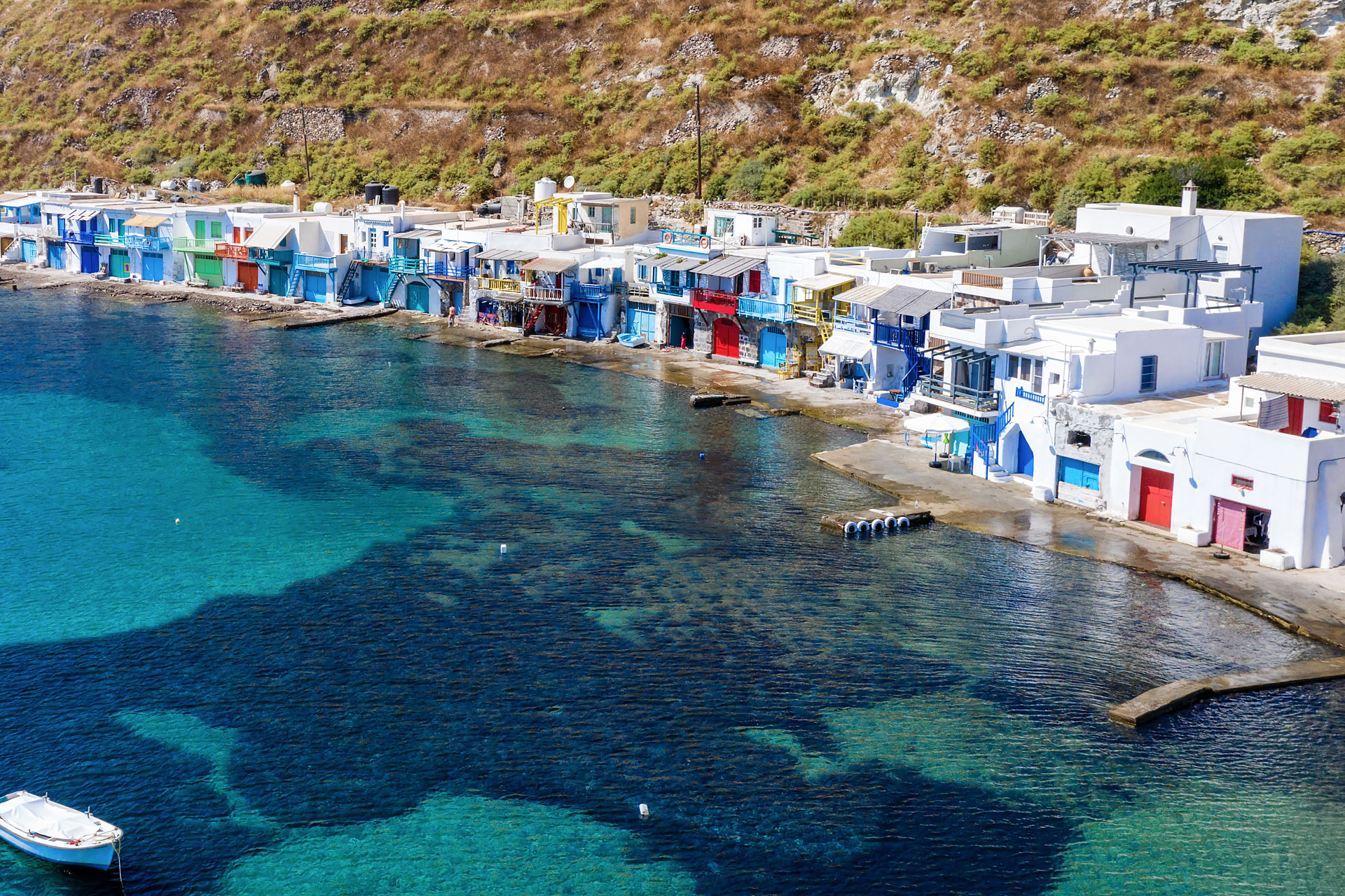
Milos is not just an island of beauty — it’s a land of legends. According to Greek mythology, the name “Milos” comes from a young man named Milos, who was guided by the goddess Aphrodite to discover the island. Handsome and graceful, Milos captured the hearts of three Olympian goddesses — Hera, Athena, and Aphrodite — sparking the famous dispute known as “The Judgement of Paris.” As a result, Paris awarded Aphrodite the golden apple, declaring her “the fairest of them all.”
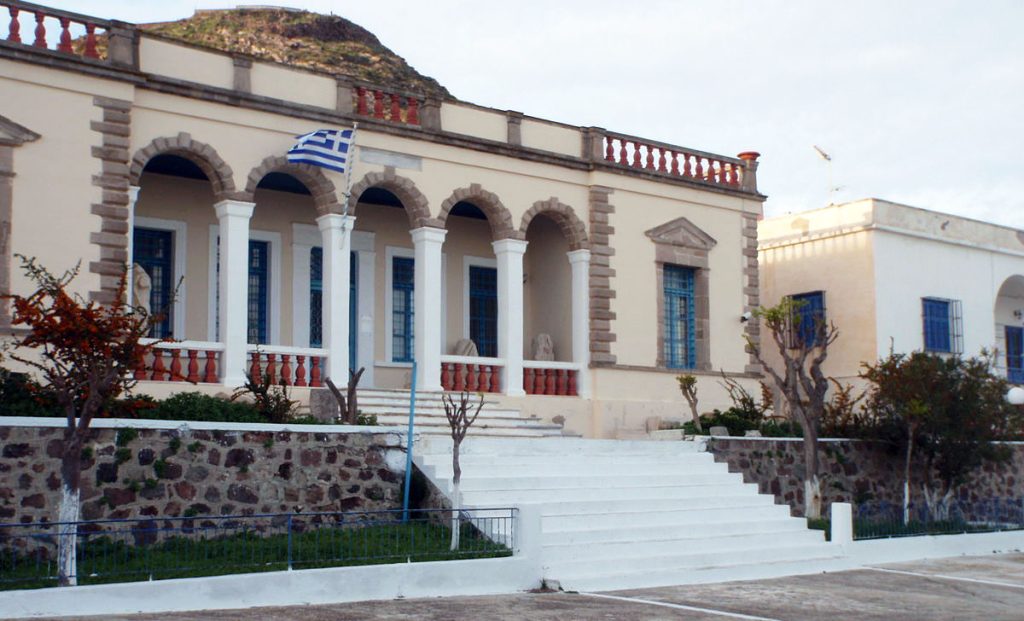
Myth and history intertwine deeply on this Cycladic island. The ancient city of Phylakopi flourished during the Minoan period as a major trade hub for obsidian — a volcanic rock that once made Milos a powerful economic center. A clay model of a boat, found in a burial site from the 3rd millennium BC, is displayed today in the Archaeological Museum of Milos, symbolizing the island’s early maritime trade.
Nearby, the ancient city of Klima reached its peak during the Archaic and Classical periods. Protected by strong walls that reached the sea, the city was known for its public buildings, its own silver coinage, and a unique local alphabet. The theater of Klima could seat up to 7,000 spectators — a sign of its cultural significance.
One of Milos’s greatest treasures is the Christian Catacombs — the second most important of their kind after Rome. Carved into soft volcanic rock, they stretch 184 meters and lie between Trypiti village and the ruins of ancient Klima.
And of course, Milos is forever linked to Aphrodite — the famous statue of Venus de Milo, crafted during the Hellenistic period, now housed in the Louvre. A perfect replica awaits visitors at the Archaeological Museum of Milos.